Subscribe for Free to Citizen Zeus

Get original insights and valuable tips on learning to transform. Your privacy is safe with us.

Becoming the Change You Wish to Be

“If we could change ourselves, the tendencies in the world would also change. [Popularly paraphrased as “Be the change you wish to see in the world.”] (Mahatma Gandhi)

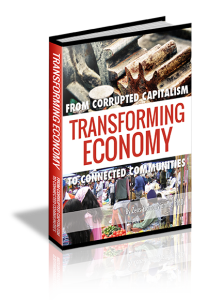
“We have been taught, often with ulterior motives, to understand change as something that happens to us, as something beyond our control… But what if change is something that happens from us, something we choose, initiate, and develop?” (From the introduction of the soon-to-be released book, Transforming Economy: From Corrupted Capitalism to Connected Communities, by Zeus Yiamouyiannis, Ph.D.)

It is one thing to think abstractly about “being” the change. It is quite another to go about becoming the person that can “be the change”. Changing is not something you merely decide to do or not. It is something you learn to do. Constructive change is something you engage consciously and proactively.

Imagine you are a child in a family where one parent decides to pack everyone up and move households without explanation. No goodbyes, no time to process emotions, no conversation about the future and what it holds, no planning for transition. This is change done to you. As a child with limited capacity to understand the larger forces and decisions around you, you would likely associate such change with powerlessness.

Many of us remain like that child into adulthood. We see ourselves being swept up in change beyond our control, and we seek to buffer its effects. We remain in a reactive mode, viewing change like a wild horse that must be tamed or avoided.

However, even in situations of change beyond our control, our response can be an empowered choice. We forget this, precisely because we have been trained to simply accept or reject change (the passive consumer mentality) rather than engage, investigate, and interact with change (the active citizen mentality).

Becoming an effective change-maker means learning how to meet and treat change (in yourself and your world) as a subject to engage rather than as an object to fight.

So how do you do this?

Engaging change: Confronting assumptions

First, it is essential you confront the assumptions you have been taught about change. These assumptions are either conscious or unconscious and they have a powerful effect on your emotions and your choices around change.

  • Change creates instability (true). Therefore change is bad (false). Most people like their routines and rhythms and do not simply want life to be careening from one unpredictable situation to another. However, without the instability created by change, there is no such thing as creativity, insight, and even love. Biological life itself would be impossible without the constant change involved in the chemical reactions that keep your body running. Change is necessary for life. Instability can be positive.
  • Change is something that presents itself to you (true). Therefore, your only real choice is to accept or reject it (false). Change is not a product; it is a process. Change is not an object for your approval; it is an unavoidable part of reality calling for your participation. Change is essentially an opportunity to engage life more fully and responsibly. Change that feels initially painful (losing a job) can liberate you to pursue your dream vocation. Change that feels initially pleasurable (getting drunk) can end up in a hangover. First impressions are not good indicators for change. One must engage change over time and go beyond simplistic accepting and rejecting.
  • Change will come anyway, even if you try to avoid it (true). Therefore, have someone else deal with it (false). Avoiding the thought of aging does not prevent death from coming. You can outsource your anxiety to a priest who will reassure you about ever-lasting life, but this does not alter the physical reality. Conversely, you can choose to live present life more profoundly by expressing yourself through that change process called growth. Not to do so means giving up your power, depth, and choice.

What are the effects of false assumptions about change—that change is bad/painful, a pre-formed product, and better handled by others? The primary effect is fear of change, and therefore a failure to learn how to engage change well.

Modern research shows that threat shuts down the parts of the brain associated with learning, and that encouragement opens up and empowers these learning parts of the brain. In short, if you see change as a threat, you will not be able to learn from it. If you see change as an intriguing opportunity you will prosper in learning change.

Thinking of change as “a done deal,” created by others and voted on by you, is not much better than fearing change, because this assumption reinforces passiveness in the face of change, and intensifies the desire to offload choices regarding change to others—politicians, experts, etc.

These effects combined together give one the impression that change is a consumer commodity. The multi-billion dollar advertising industry knows this and thrives on placing appliance ads (and your opportunity to buy “pleasant change”) next to newspaper stories of unpleasant change— wars, famines, tornadoes, and robberies.

The suburban American Dream, with its McMansions and big barbecue grills, is really just an updated (but just as primitive) version of the cave with a fire, a sanctuary of material comfort amidst the dangerous, swirling world of change outside.

But in a world that is seeking to move past mere survival toward thriving, a consumer ethic around change is no longer adequate. Witness the story of an internet forum contributor who spends all his time consuming books and writing journals on change without getting anywhere:

“Why do (I) fear change? Even if it can bring good things? I’ve tried to change so many, many times but, so far, have always failed. Am I actually afraid of changing? And, if so, why? How can I overcome this fear?…

(S)elf-help books: I must have every title. I read them, get excited about the info they give, change a little but just go back to the way I was again. I journaled for five years. When I started to look back on what I’d written one year before it was exactly how I was today, two years before, just the same, etc. The same problems, nothing had changed, only I had gotten older. I could write a book on self-help. I can advise others, but I can’t seem to change. 101 exercise regimes started, but I quit them all. I’m in a job/career that I’ve always wanted to leave but never have. I’d have opportunities to go into other careers, but I’ve not. I was on the brink of changing my life but I just got so scared and scurried back to the life that is making me lifeless. Afraid I’d miss my friends, the way of life that is familiar to me. This safety net I have I guess? I must be afraid of change. Why? I wish I knew, and if I did, maybe I could resolve this terrible problem that is just frustrating me so so much.” (DustyMan) (http://www.uncommonforum.com/viewtopic.php?t=76058)

Notice how thoroughly the previously identified false assumptions are embedded in DustyMan’s predicament. 1) He experiences intense doses of fear around change, shutting down his ability to learn effectively about change and persist in improvement, 2) He is consuming products that he hopes will give him the magic bullet, 3) He is looking for some higher authority to give him the keys to success. Change remains external to him.

Change must have an internal component, a committed attitude of encouragement and curiosity around change (“What am I capable of? Let’s see.”). DustyMan cannot “be” change without “becoming” friends with change. He cannot become friends with change if he does not invite the creative, connective prospect of change into his character.

Responding effectively to unexpected change

“It’s not so much that we’re afraid of change or so in love with the old ways, but it’s that place in between that we fear… It’s like being between trapezes. It’s Linus when his blanket is in the dryer. There’s nothing to hold on to.” (Marilyn Ferguson)

Even change done “to you” can be transformed into change done “from you” by your proactive response. What if you are fired from a job? What if your loved one suddenly dies of a heart attack? What if you get in an accident and lose the use of your legs?

Proactive response to change is the difference between a paraplegic who trains for the Paralympics and one who falls into a depression and shuts himself in his home. We see and know this difference. But somehow it does not register in our general attitudes toward change.

Traumatic changes are almost always considered a curse, and pleasant changes a blessing. Then we simply go about trying to minimize the traumatic and maximize the pleasant, tally them up, and calculate whether we’ve had a good life.

We rarely ask the question, as I was forced to when moving to the Philippines, “Can traumatic changes accelerate self-awareness and focus?” “Can pleasant changes make life just interesting enough to avoid boredom but secure enough to live in shallow complacency?”

Initiating and developing change

“Our deepest fear is not that we are inadequate. Our deepest fear is that we are powerful beyond measure. It is our light, not our darkness that most frightens us.” (Marianne Williamson)

What examples of positive, thoughtful, caring change we can learn from? Actually, there are many if we just look around. These three short videos below are good demonstrations.

What do these videos have in common? They all embrace positive change as a “what if” experiment, a dazzling alternative, an invitation to a meaningful life. Therein lies the genius of change. It is both the pathway to and the fountain from which conviction and purpose spring. These people get energy and meaning out of change, and so can you.

Change of frame: In this video (“A Twelve Year Old Tells Us How the Banks Are Robbing Us”), Victoria Grant, calls out the corruption of the Canadian private banking system. She is articulate and gutsy. She provides policy alternatives. If Victoria represents even a sliver of the future generations, then there is hope for positive change.

Change of heart: This inspirational video (“The Greatest Man on Earth!”) shows an Indian chef and a Brahmin who used to work at a top restaurant before opening his heart and providing delicious food, grooming, and clothing to the hungry, suffering, and poor on India’s streets.

Change of life: What I like about this more pragmatic video (“The High Price of Materialism”) is its concise demonstration of how we can actually improve our standard of living by owning less and sharing more. Sustainable change can actually be a step up, rather than a step down.

Conclusion

As these videos show, we can embrace our highest human possibilities by engaging change constructively. These videos also demonstrate that if we fail to courageously and consciously work for mindful, positive change we will leave thoughtless, destructive change in our wake.

The present situation is clear. We have created far greater threats by trying to avoid change, then by accepting the challenge of change. Our refusals to change our wasteful ways, our addictions to personal comfort, and our tendencies to exploit others, have created greater environmental, political, and economic instability, not less.

Even now, when the consequences are in our face, we still resist the need for deep changes. For all the rhetoric of “reform” and “change you can believe in” in education, economics, politics, and the environment, precious little substantive change has been initiated and sustained. Perhaps, we are avoiding future blame or running from past guilt.

When we embrace change, we replace these small and static conceits with the desire for initiative and movement.

Let’s take up change as a joy, rather than a grim necessity. Let’s make change an invited, pleasurable part of how we learn. We will be straining against every habit of our industrial training, our deeply engrained emotional, institutional, and cultural habits.

However, if we pull this off, a powerful liberation will emerge. No longer will we be hiding away in our physical, emotional, mental, and spiritual caves, because now we can live with each other and appreciate the gift of change that we have created together.

In this viral, interconnected world, small change influences can assert large effects. Conscious change that you embrace now can have a multiplied result. Therefore, seize the opportunity and challenge of change in what deeply calls you, and work with others to become more dynamic participants in the shaping of our world.

Now is time to make good. Now is the time to make change good.

Please offer your own change story in the comments. How have you engaged change proactively?

Learning to Die Well (and Transform for the Better)

I started my recent guest post, “Daring to Die”, with a controversial passage:

“I came to live in Manila, Philippines two years ago, and I died.   I died to the person I thought I was.  I came with plans and pretensions, and these were stripped from me.  I was left an exposed man—a man ready to absorb life outside the cocoon of my former self.”

I got quite a response from family, friends, and readers.  “Great article,” said many, “but do you really mean die?”  “Isn’t that pretty melodramatic?”, asked my wife.  Another friend wondered, “Are you trying to be provocative?  Don’t you really mean ‘transformation’?”

Yes, I was trying to be provocative, but, yes, I also deliberately chose “die.” What happens when you can no longer restrict transformation to manageable sections of your life?  What happens when events force whole populations to question their central identities and assumptions?

You get the “death” of the old and transformation into the new—deep, comprehensive transformation.

You and I are taught to fear comprehensive transformation in any area of our lives, as we are taught to avoid even the thought of physical death.  But every once in a great while, personally and socially, we are confronted with a core demand to change not just “things” about us but who we are and what our society represents.

We are now in such a time.

Our Industrial Age and its values and principles are dying.  Materialism, comfort, and working in a 9-to-5 job, getting promotions, and retiring no longer provide the purpose or even sustainable physical foundation upon which to live.  Most of us sense this dying but don’t know what to do.

We need to learn to die well and become transformed for the better.

Butterfly cells as a metaphor for death and rebirth

Most people imagine a caterpillar slowly and beautifully changing into a butterfly in the shielded comfort of a cocoon.  The reality is far different.

New cells, called imaginal cells, form in the cocoon as if from nowhere.  These imaginal cells are so different that, even though they emerge from within the caterpillar itself, they are attacked as invaders.

Eventually the number of imaginal cells are too great to be countered, and they prosper and clump together to form the specialized parts of the new butterfly.

Cutting open the cocoon midway through development, you see not an orderly transition but rather a mass of ooze-like cells engaged in a struggle.  The old cells die, but not without a fight, and the new cells emerge to complete a most remarkable metamorphosis.

So it is with our lives. The death of old ideas and ways is a valiant one, a noble struggle, which vets and tests the mettle of those new ideas and ways that emerge.

Old ideas, habits, social markers, and conventional wisdom do not yield gracefully.  They fight to remain alive before they eventually die.  We, of course, do not literally die with them, though it can sometimes feel like we have.  We remain.

Learning is facing, choosing, transforming, and creating

Few people flat out “want” to die.  But learning to transform involves consciously preparing for the death of obsolete ways that may appeal to our psychological desires for security but work against our practical requirements for the future.  A caterpillar yields to a natural process of change ending in a completely new entity.  We must face, choose, and create our change processes to do the same.

I outline these processes of comprehensive transformation in some detail in the areas of economics, education, and spirituality on this blog, guest posts, and a soon-to-be released book on the future of economies called “Transforming Economy: Moving from Corrupted Capitalism to Connected Communities.”

These essays identify evidence that business as usual is definitively ending and being replaced by new, emerging forms:

Economy: Mantras like “buy, buy, buy” and “jobs, jobs, jobs” don’t cut it anymore.  We are reaching the material limits of our environment in our overproduction of goods and financial limits in terms of debt.  Automation has erased jobs, even as the population has grown.  Lifestyle and meaning dependent upon these blind articles of economic faith are bound to die with them.

We are being invited to produce rather than simply consume.  We are being called to contribute meaningfully to our communities and families without necessarily having a paying job. Non-material goods like learning, diversity, conversation, progressive faith, creativity, and problem-solving are starting to emerge as new sources of value.

Education: Schools are being pressured to produce more students who succeed in the aforementioned obsolete economic model.  So even if those students succeed, overall they fail, because the purposes of schooling do not match up with emerging trends.  Education reform has yet to grasp the crux and enormity of change gripping our world.

We ask students to delay direct contribution to society for nearly two decades (counting the years from elementary school through university graduate education).  This is a waste of learners’ minds, just as mindless consumption is a waste of the environment.  “Direct learning,” the application of the learning mind directly to concrete community problems starting from an early age would be a welcome change.

Spirituality:  Mainstream churches are aging fast and losing members at staggering rates.  Young people are simply finding many conservative churches too intolerant and many liberal churches too irrelevant.

The fastest growing category in Western countries is “spiritual but not religious”.  Young people are looking for experiential environments that demand their involvement and leadership and that prepare them for this life of change and not simply the next life.

Deeper looking

When presented with physical death, we typically put our house in order, giving away what we cannot take with us.  We put the important before the urgent. We put the fundamental issues of love and mourning before the pressing trivialities of committee meetings.

This is not simply an ideal we need practice when we are about to leave this world.  It is a practice we can cultivate now, by surrendering what can no longer be maintained and opening to rebirth—the rebirth of a new person, a new awareness, a new society, and a new reality.

If we look more closely into our lives, we can gain insight into facing the shadow of physical death.  We notice that dying is itself a change ending in a new form of life.  We practice this by engaging the present shadows in our psyches—fear of change, fear of vulnerability, fear of not being what we thought we were.

We realize upon deeper looking that we never were what we thought we were.  We are a work in progress, as much created as creating.  Our job is to keep that conversation between creating and being created continually moving.

Ask yourself: Are you playing “not to lose” a mortal life that is already lost when you were born.  Are you clinging to your fragile condition?  Are you trying to freeze time and fortune in a “sensible” (but somewhat senseless) job or a comfortable rut musing about the “good ole days?”

Try something fundamentally new.  Lose the life you cling to in order to gain a life that grows within you.

If you like this essay, please subscribe for free up at the top of the Citizen Zeus home page. I will notify you about upcoming essays on transformative learning and give sneak peeks into my upcoming book, “Mindflexing: Unleashing the Power of Transformative Learning” as well as information on how to access “Transforming Economy:  Moving from Corrupted Capitalism to Connected Communities.” Thanks!

by Zeus Yiamouyiannis, Ph.D. January 28, 2013, copyright 2013 (please feel free to share for educational or personal purposes)

How to Directly Fix a Disabled Education System (Rather than Blame Teachers, Parents, or Students)

“Houston, we have disability problem.”  It’s not a learning disability problem. It’s not primarily a teaching disability problem.  It is an education disability problem. Our current way of understanding learning, its purposes and practices, no longer works. Teachers themselves are not the main source of this problem.  The vast majority are smart, diligent, underpaid professionals [...]

Continue reading...

On the Wisdom of Children, the Immaturity of Adults, and the Folly of Schools

Adults often tease children for having an imaginary friend or special stuffed animal.  “Aww, isn’t that cute,” we say, believing they’ll grow out of it Yet that imaginary friend or stuffed animal is teaching that child to interact, learn language, exercise imagination, and engage a host of important life challenges. Children are recognizing, rehearsing, and [...]

Continue reading...

A Revolutionary Cliché: How the Serenity Prayer Can Transform Learning to Change

“Grant me the serenity to accept the things I cannot change, The courage to change the things I can, And the wisdom to know the difference.” –Reinhold Niebuhr This Serenity Prayer is known by some as a comforting cliché and by others as a powerful guide in dealing with tough life issues. It has been [...]

Continue reading...

How hyper-positivity can harm your learning, your success, and your judgment

You know the typical mantras:  “Look to the horizon.  Don’t let anything stand in your way.  Be the little engine that could.  Get up and go. Get those blues and doubts right outta your head.” What do they all imply?  All you need is positive, positive, and more positive. They’re wrong. No, I’m not Scrooge.  [...]

Continue reading...

The Future of Learning is Already Here: Let’s Take Up the Call

“The Book I would pass to my children would contain no sermons, no shoulds and oughts.  Genuine love comes from knowledge, not from a sense of duty or guilt… My wish would be to tell, not how things ought to be, but how they are, and how and why we ignore them as they are.” [...]

Continue reading...

The Starting Line is What You MUST Be (Not what You Should Be)

It seems like such a simple question, “Who are you?”  Yet you’ve almost certainly been taught to answer it wrong.  School, family, community, and nation tell you, “You are what you should be.” You are told that you are your role, your function for others, your bottom line, your possessions.  You are taught that you [...]

Continue reading...

“Learning on the Leading Edge” (TM) of Online Business

The ground is moving underneath online business and social media.  If you want to be relevant in a few years, listen up! We all know how fast technologies can develop, but few people are paying attention to the meta trends in human growth, that which technology serves.  Answer correctly where human growth is going and [...]

Continue reading...

The Zeus Experiment

So we are kicking off The Zeus Experiment. (There, see that, I already inserted a hyperlink with html code… baby steps, baby steps.) I am interested in creating not only an attractive, manageable site, but a real online business helping others transform their lives by transforming the way they learn.  And I am willing to [...]

Continue reading...